
How to Fix Common Hydroponic Problems UK: pH Crashes, Algae, Root Rot

As an Amazon Associate we earn from qualifying purchases. This page contains affiliate links — if you buy through them, we earn a small commission at no extra cost to you.
Yellowing lettuce leaves and a sudden halt in growth can feel like a full stop on your hydroponic hopes, especially when space is tight in a flat or on a balcony. The good news is that these issues are almost always fixable once you understand the quirks of British tap water. Here’s a step-by-step first aid plan to rescue pH crashes, banish algae, and pull the plug on root rot—without splashing out for a whole new system.
Why is my hydroponic system failing in the UK?
Most mysterious hydroponic failures in the UK come down to hard tap water and added chlorine. Hard water pushes your nutrient solution's pH up, causing nutrient lock-out, while chlorine kills the beneficial microbes that keep the system stable.
- Hard water: Most UK regions, especially the South East, have high calcium and magnesium levels. This naturally drags the pH upwards, stopping plants from absorbing what they need.
- Chlorine and chloramine: According to Water UK, suppliers add these to keep our drinking water safe. In a small hydroponic reservoir, they instantly wipe out the microbial balance that helps break down organic waste.
A quick test with a cheap TDS meter will show you if the water is already heavy with dissolved minerals before you even open the nutrient bottle. Owners consistently find that switching from straight tap water to a simple carbon filter stops the rapid pH swings they saw during their first week of growing. If you can let tap water sit uncovered for 24 hours, the chlorine will off-gas, though chloramine will not. This is why a small activated-carbon filter is the belt-and-braces solution most flat growers rely on.
How do you fix a hydroponic pH crash?
To fix a hydroponic pH crash, drain the reservoir completely, rinse it out, and refill it with filtered water mixed with fresh nutrients adjusted to a pH of 5.8 to 6.2. Using a mild citric acid down-solution will help stabilise the water and allow your plants to resume normal nutrient uptake within 48 hours.
A sudden pH drop or rise is the fastest way to see yellowing leaves (chlorosis) and stunted growth. When hard tap water raises the baseline pH and chlorine strips the buffering microbes, the system becomes highly unstable.
Emergency Protocol:
- Drain the bucket completely.
- Rinse the reservoir with fresh, filtered water.
- Re-fill using a pre-mixed nutrient solution whose pH you have already adjusted to the target range.
- Add a measured dose of a pH-down solution (paid link). Citric acid works well as a natural UK alternative at roughly 0.5 ml per litre.
Owners who follow this flush-and-reset routine usually report a visible recovery within two days, with new leaf growth turning back to a healthy green.
Algae Blooms: The Green Fog
Algae love light and warm water—a combination that is all too common on sunny balconies in Manchester or London. When the water turns green and a slimy film coats the roots, oxygen uptake drops dramatically.
What to do right now:
- Cover the reservoir. A cheap black bin bag (under £5) taped securely over the bucket blocks the wavelengths algae need to survive.
- Reduce light spill. If you are using a grow light, angle it away from the water surface or switch to a timer that gives the water a dark period of at least six hours.
- Add a short-term peroxide pulse. A 3 ml dose of 3% hydrogen peroxide per litre of water kills existing algae without harming the plants when used sparingly.
A common observation among balcony growers is that simply covering the bucket with a black bin bag clears the water up overnight, allowing the crop to resume healthy growth. For more on managing your setup, check our UK hydroponic guides.
Root Rot: The Slimy Nightmare
Brown, mushy roots that smell of decay are a clear sign of root rot. This is the most damaging issue you can face in a stagnant deep water culture (DWC) system.
The symptoms include brown, soft roots, a foul, sour smell, and wilting plants despite them sitting in plenty of water. The specific trigger in UK setups is often low oxygen levels in warm water, compounded by over-feeding with nutrient-rich solutions that end up feeding pathogens instead of the plant. The Royal Horticultural Society (RHS) notes that poor drainage and a lack of aeration are primary drivers for root decay across all growing methods.
Step-by-step rescue:
- Remove the plant from the bucket and gently rinse the roots under lukewarm water.
- Prune all brown or mushy sections back to healthy white tissue. A faint "fresh pineapple" smell indicates vitality.
- Increase aeration. Install an air stone and a quiet air pump; run it continuously to raise dissolved oxygen.
- Treat the water with a hydrogen peroxide dip. Submerge the cleaned roots in a solution of 5 ml 3% peroxide per litre for five minutes, then rinse.
- Refresh the nutrient solution with a slightly lower electrical conductivity (EC) to avoid over-feeding.
Neglecting regular water changes is the error that consistently fills troubleshooting threads. A simple weekly flush cuts the rot risk dramatically.
Prevention: Your Weekly Maintenance Routine
The best cure is a regular check-up. Spend five minutes each week and you will dodge most crashes.
- Change water every 7 to 10 days for small DWC buckets.
- Test pH and EC with a combined meter; adjust if the pH drifts outside 5.8 to 6.2.
- Rinse the reservoir and wipe the interior with a soft cloth to remove any bio-film.
- Filter tap water before each top-up; a basic carbon filter removes chlorine and reduces hardness.
- Set a timer on your air pump to ensure constant oxygen flow, even when you are out for the weekend.
A simple checklist makes it straightforward:
- Visual check of water colour and root health.
- pH reading—adjust if needed.
- EC reading—ensure it matches the crop's growth stage.
- Quick rinse of the bucket interior.
Most flat growers find that a weekly 5-minute routine stops the vast majority of issues that would otherwise force a costly system overhaul. Now that you have the emergency steps and the prevention plan, you are ready to keep your balcony garden thriving. Download the free vertical gardening quick reference(/free-download/) to have this checklist on hand whenever you need it.
Quick Answers
Can I use tap water for hydroponics in the UK?
Yes, but you must treat it first. UK tap water usually contains chlorine or chloramine, which can shock roots and kill the beneficial microbes your system relies on. Using a carbon filter or letting the water sit uncovered for 24 hours to off-gas the chlorine is the best way to prepare it before mixing in nutrients.
How often should I change my hydroponic water?
For small DWC buckets on a balcony or kitchen counter, change the water every one to two weeks. Larger systems benefit from a weekly check of pH and EC; if the pH becomes unstable or the water turns cloudy, replace the solution immediately.
What do healthy hydroponic roots look like?
Healthy roots are white or light tan and emit a faint, fresh scent similar to a pineapple. If they turn brown, become mushy, or start to smell sour, you are dealing with root rot and need to prune the dead tissue and increase aeration straight away.
UK Hydroponic Troubleshooting Reference
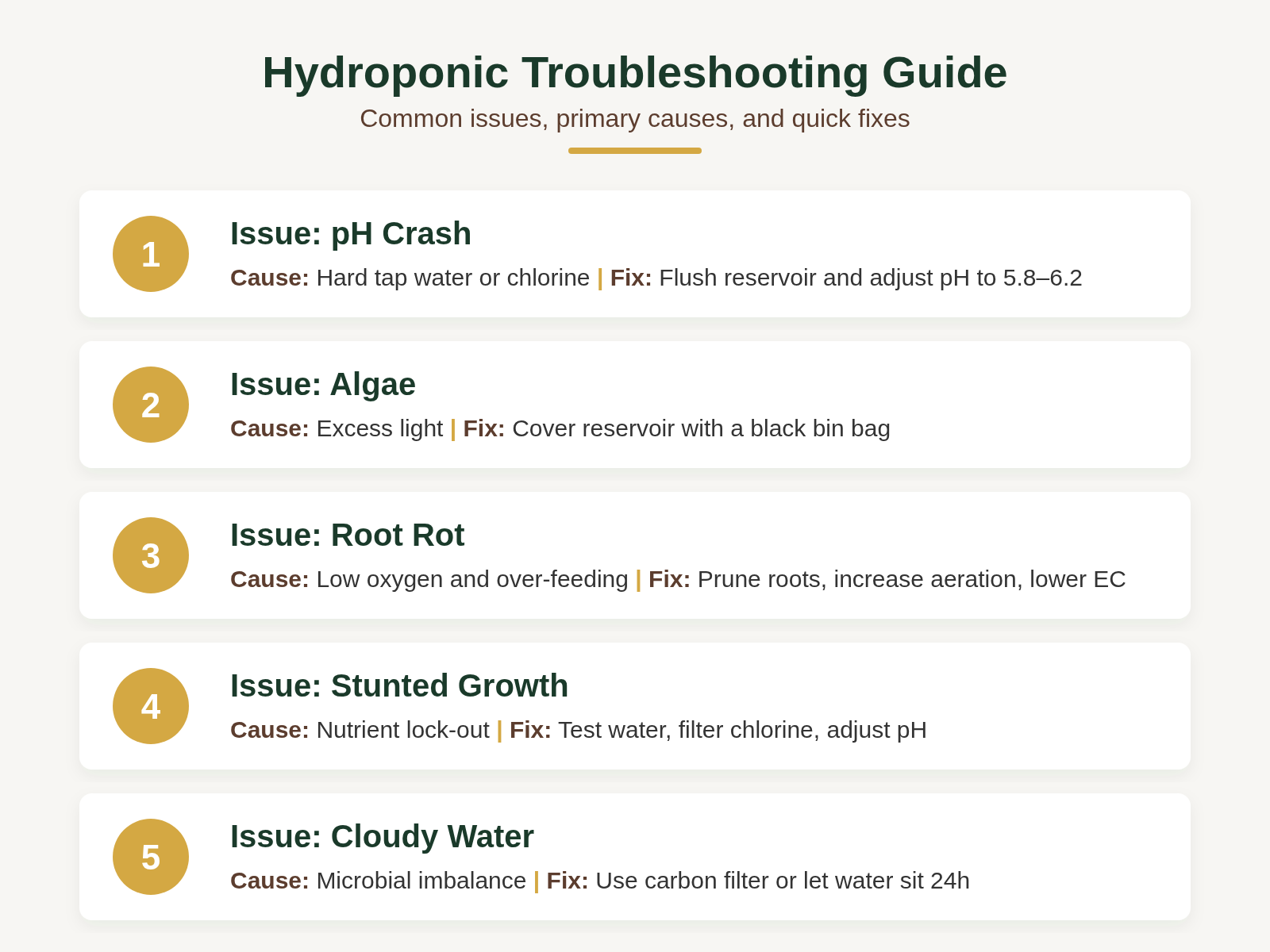
| Issue | Primary Cause | Quick Fix |
|---|---|---|
| pH Crash | Hard tap water or chlorine | Flush reservoir and adjust pH to 5.8–6.2 |
| Algae | Excess light | Cover reservoir with a black bin bag |
| Root Rot | Low oxygen and over-feeding | Prune roots, increase aeration, lower EC |
| Stunted Growth | Nutrient lock-out | Test water, filter chlorine, adjust pH |
| Cloudy Water | Microbial imbalance | Use carbon filter or let water sit 24h |
What to Do Now
You now have a clear, UK-specific first-aid plan for pH crashes, algae, and root rot, plus a tidy weekly routine to keep future problems at bay. that most failures stem from water quality and an oxygen shortage—two things you can control without buying a whole new kit.
Don't let a single setback ruin your harvest. Grab the free vertical gardening quick reference (/free-download/)—a printable checklist that walks you through each of the steps above, plus extra tips for keeping your balcony garden in top shape.
If you run into an issue that isn't covered here, feel free to get in touch with the SolisStrata Team or read more about who we are on our about page. Happy growing, and remember: a little routine now saves a lot of panic later.
Where I Learned This
- Royal Horticultural Society (RHS)
- Water UK
- Hydroponics UK
Related Guides
For a complete overview, see our Hydroponics Equipment for Beginners: What You Actually Need (And What to Skip).
As an Amazon Associate we earn from qualifying purchases. The products linked above are ones we recommend based on independent research and owner feedback.
Note: General guidance only, verify details with a qualified professional or official source.
You may also like
Other listings for the same job.
- 5 W mini pump, 350 L/h (paid link)
- AQQA air pump, 12 W (paid link)
- 24-hour plug-in timer (paid link)

Bob is the publisher. We are a UK-based resource for simplifying complex topics to the world of small-space and container gardening. Helping UK gardeners get the most out of their balconies and patios. You can read our full story on the About the Author page.