
pH and EC Meters for Hydroponics UK: What the Numbers Actually Mean

As an Amazon Associate we earn from qualifying purchases. This page contains affiliate links — if you buy through them, we earn a small commission at no extra cost to you.
Your lettuce is turning pale, the basil is wilting, and you’ve topped up the nutrient bottle three times. The culprit isn’t a lack of food—it’s the chemistry you can’t see. In most UK flats, the hard tap water you pour in is already pushing the pH up, and a small countertop reservoir can swing the electrical conductivity (EC) faster than you can stir. Reading the numbers on your meter correctly is the only way to stop guessing and actually fix the problem.
Download the free vertical gardening quick reference – a cheat‑sheet with the right pH/EC ranges for every growth stage and a quick‑check list for flat‑dwellers.
Why Are Your Plants Starving Even With Nutrients?
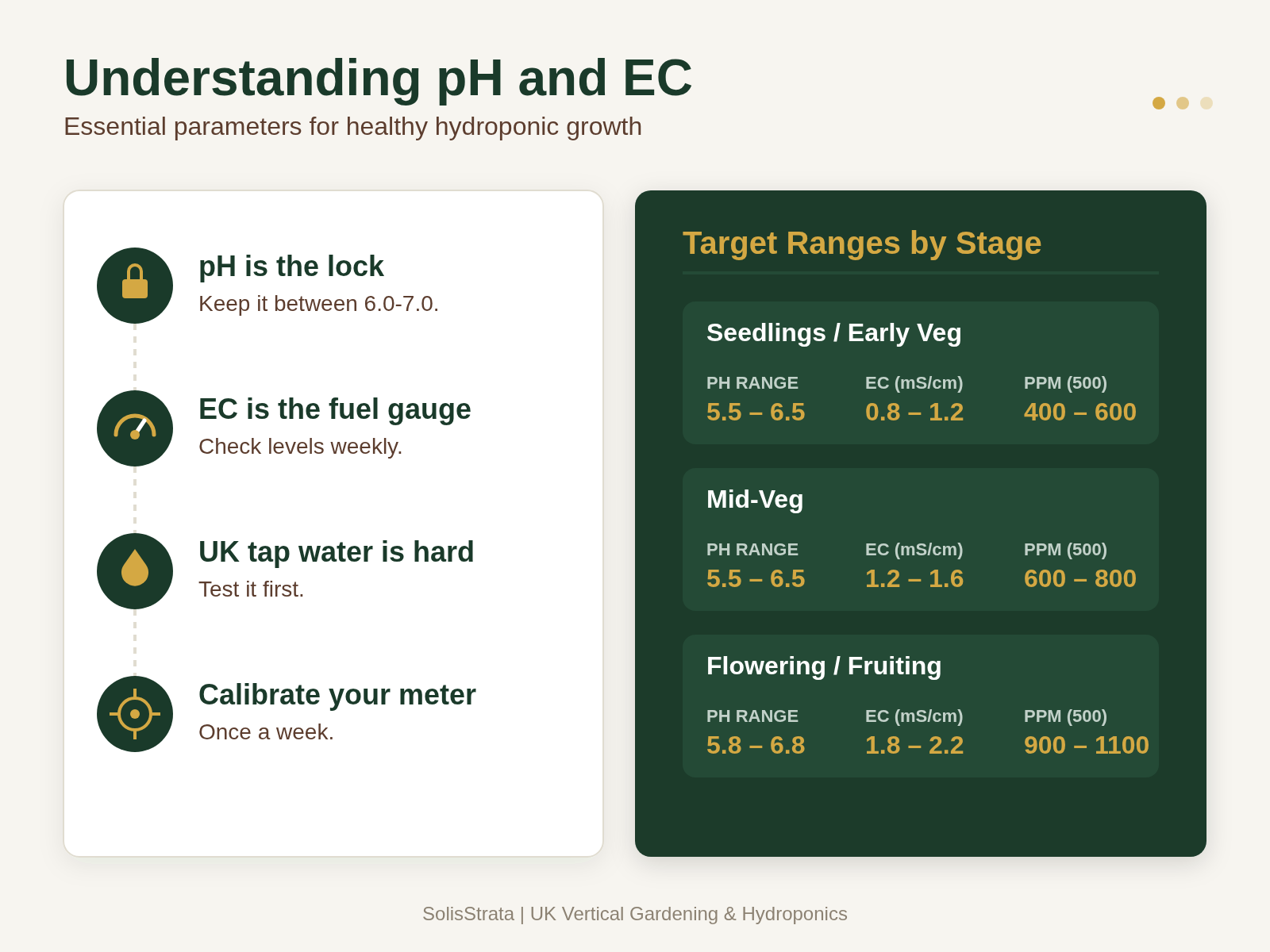
Plants starve in nutrient-rich water when the pH level locks them out of absorbing food. Think of it as a lock-and-key problem: pH is the lock, and the nutrients are the key. If the lock is set too high or too low, the key can’t turn, leaving the plant unable to absorb the fertiliser you’ve added. EC, on the other hand, is the fuel gauge—it tells you how concentrated those dissolved nutrients are in the solution.
A common panic point is a reading of 0.0 EC. That number does not mean the water is nutrient‑free; it usually signals a dead battery, a dry probe, or a dirty electrode. Replace the battery or rinse the probe, and the reading jumps back to a realistic value.
“Reader on Mumsnet noted their meter read 0.0 for three days, only to realise the probe was dry and the battery had died.”
If you ignore the 0.0 and start adding more nutrients, you’ll end up with a nutrient‑rich solution that the plant still can’t use—a costly waste of both money and space.
The pH Sweet Spot: 6.0–7.0 Explained
In UK hydroponics, the 6.0 – 7.0 range is the sweet spot for most leafy greens, herbs, and fruiting crops. Below 5.5 the solution becomes too acidic, leaching calcium and magnesium from the roots; above 7.2 it turns alkaline, locking out iron and phosphorus.
How UK tap water pushes the lock
Water hardness across the UK averages 120–200 mg L⁻¹ of calcium carbonate, according to Water UK. Hard water has a natural buffering effect that nudges pH upwards, sometimes reaching 7.8–8.0 straight from the tap. In a small countertop reservoir, the change can happen overnight, especially if the solution sits in a warm room.
Adjusting the lock:
- pH‑Down (phosphoric acid) is the most reliable way to bring a high‑pH solution back into range.
- pH‑Up (potassium hydroxide) is needed only if you’re consistently below 5.5, which is rare with hard UK water.
A frequent flat‑dweller complaint is that the pH “creeps up to 8.0 overnight”. The fix isn’t a bigger nutrient mix—it’s a daily check and a small dose of pH‑Down before each refill.
EC vs. PPM: Decoding the Numbers
EC (electrical conductivity) measures how well the solution conducts electricity, which directly correlates with the total dissolved salts. PPM (parts per million) is simply a scaled version of EC: EC (mS cm) × 500 = PPM (500‑scale).
Example: An EC of 1.4 mS cm reads 700 PPM. That’s a solid vegetative level for lettuce or basil.
What the gauge means at different stages
- Seedlings / early veg: EC 0.8–1.2 mS cm (400–600 PPM). Too high and the tiny roots get burnt.
- Mid‑veg: EC 1.2–1.6 mS cm (600–800 PPM). This fuels rapid leaf growth.
- Flowering / fruiting: EC 1.8–2.2 mS cm (900–1100 PPM). Higher strength supports bloom but raises the risk of tip burn.
Temperature tricks the gauge
Warm water lowers resistance, so the same solution reads higher EC at 20 °C than at 15 °C. The Royal Horticultural Society notes that a 5 °C rise can add 0.1 mS cm to the reading. If you add warm tap water to a cold reservoir, the EC will spike—it’s not extra nutrients, just a temperature effect.
Meter Types: Pen vs. Probe (And Why Calibration Matters)
Digital vs. analog
Digital meters dominate because they display decimal points and often include automatic temperature compensation. Analog meters can drift quickly and are rarely calibrated by the user, making them unsuitable for the precision a UK flat‑grower needs.
Pen meters – cheap but fickle
Pen‑style meters cost £20–£40 from most UK garden centres. They need only a few millilitres of solution, which sounds perfect for a 2‑litre countertop tank. In practice, owners report “drift” after a week—the reading gradually slides up or down even when the solution hasn’t changed. The main gripe is that the tiny sensor tip dries out between uses, especially in winter when the room is heated.
Probe meters – the solid choice for small spaces
Probe meters sit at £50–£80 and need at least 50 ml of solution for a stable reading. The larger sensor stays submerged, so the electrode stays wet and calibrated longer. Reviewers consistently find that probe meters hold their calibration for weeks, even with daily top‑ups.
Calibration is non‑negotiable. Most manufacturers supply a 1.0 mS cm and a 2.0 mS cm solution. you should calibrate once a week—or immediately after a battery change—because even a small drift can push your pH out of the 6.0–7.0 sweet spot.
“Owners of budget pen meters often cite ‘drift’ after a few weeks, whereas probe meters hold their calibration longer.”
Which to pick?
If your reservoir is under 5 litres and you’re comfortable measuring 50 ml each time, the probe is worth the extra £30. For a hobbyist who only checks pH once a week, a pen can work if you calibrate before each use and keep the tip wet with a drop of distilled water between readings.
Explore our full archive of equipment guides on the blog.
How to Calibrate Your Hydroponic Meter
Meters drift over time, especially cheaper pen models. Calibrating them takes less than five minutes and saves you from accidentally starving or burning your plants based on a false reading.
1. Clean the sensor
Rinse the probe in distilled or deionised water. Never use tap water for cleaning before calibration, as the hard minerals will throw off your baseline. Tap it dry gently with a microfibre cloth without rubbing the glass bulb.
2. Prepare the buffer solution
Pour a small amount of your 7.0 pH buffer (or 1.4 EC calibration fluid) into a clean, separate shot glass. Never dip your meter directly into the main calibration bottle, as this contaminates the whole supply.
3. Submerge and adjust
Place the meter into the shot glass and wait 30 to 60 seconds for the reading to stabilise. If the number on the screen doesn’t match the buffer solution, use the small screwdriver provided (or the digital calibration button) to adjust the reading until it’s spot on.
4. Rinse and repeat
Rinse the probe in distilled water again. For better accuracy, repeat the process using a 4.0 pH buffer solution for a two-point calibration.
Troubleshooting: “My Meter Says X, But My Plant Looks Y”
Below is a quick‑scan checklist that matches the most common mismatches between meter readings and plant symptoms.
| Symptom | Likely Reading | Immediate Fix |
|---|---|---|
| Yellowing leaves, stunted growth | pH > 7.2 (lockout) | Test tap water first. If it’s 7.8, add pH‑Down to bring the mix to 6.5 before adding nutrients. |
| Crispy leaf edges, brown tips | EC > 2.0 mS cm (nutrient burn) | Dilute with fresh water, then re‑measure after temperature stabilises. |
| Very slow growth, pale foliage | EC < 0.8 mS cm (starvation) | Add a measured dose of nutrients; re‑check EC after 30 min. |
| Meter reads 0.0 EC or wildly fluctuates | Probe dry / battery dead | Replace battery, rinse probe, recalibrate with standard solutions. |
The “Tap Water” factor
Before you ever mix nutrients, measure the raw tap water. In many UK cities, the tap pH sits around 7.8 and the EC can be 0.3–0.5 mS cm due to dissolved minerals. If you start from that baseline, adding nutrients will push the pH even higher unless you pre‑adjust. A simple pre‑test saves you from a day‑long cycle of “why won’t my lettuce grow?”.
If you’re in the middle of a grow and the numbers look off, don’t add more nutrients straight away. First, top up with the same water you used originally, re‑measure the temperature‑compensated EC, then decide whether to dilute or add more feed. This two‑step approach stops you from over‑feeding.
Now that you’ve got the numbers under control, download the free vertical gardening quick reference – it contains a printable table of the exact pH/EC targets for lettuce, herbs, tomatoes and more, plus a daily check‑list that fits on a fridge door.
Meters Worth Considering
Two Bluelab meters that consistently appear in UK hydroponics discussions, both available on Amazon UK:
| Meter | Type | Best for | Link |
|---|---|---|---|
| Bluelab pH Pen | Pen-style (portable) | Quick daily checks in small reservoirs | Check price on Amazon (paid link) |
| Bluelab Combo Meter | Probe (pH + EC + temp) | Ongoing monitoring, holds calibration longer | Check price on Amazon (paid link) |
Prices change — always verify on the product page before buying.
Frequently Asked Questions
What is the difference between pH and EC?
pH measures the acidity or alkalinity of your water, acting as the lock that allows nutrients to be absorbed by the roots. EC measures the concentration of dissolved salts, acting as the fuel gauge that tells you exactly how strong your nutrient solution is.
Can I use tap water for hydroponics?
Yes, but only after testing its baseline pH and EC. UK tap water is often hard and alkaline, so you’ll usually need to use a pH-Down solution to lower the acidity before adding your nutrients.
How often should I calibrate my meter?
Calibrate your meter at least once a week, or immediately whenever a reading looks suspicious. Regular calibration with standard buffer solutions keeps both your pH and EC readings trustworthy.
What is a good EC level for beginners?
Start with a range of 1.2–1.6 mS cm (600–800 PPM) for vegetative growth like lettuce or basil. Increase the strength gradually as the plants mature, never jumping more than 0.2 mS cm in a single feed.
Hydroponic Nutrient Ranges by Growth Stage
| Growth Stage | pH Range | EC Range (mS cm) | PPM Range (500-scale) |
|---|---|---|---|
| Seedlings / Early Veg | 5.5 – 6.5 | 0.8 – 1.2 | 400 – 600 |
| Mid-Veg | 5.5 – 6.5 | 1.2 – 1.6 | 600 – 800 |
| Flowering / Fruiting | 5.8 – 6.8 | 1.8 – 2.2 | 900 – 1100 |
Keep Learning
You now have the three key facts: pH is the lock, EC is the fuel, and UK tap water is naturally high in calcium, which pushes the lock open too far. Keep a daily habit of testing both numbers, calibrating your meter weekly, and adjusting with pH‑Down before you ever add nutrients. Small‑space growers benefit from a probe‑type meter, but a well‑maintained pen can work if you’re disciplined about calibration.
Ready to lock in the right numbers and stop the guesswork? Download the free vertical gardening quick reference – it’s a printable cheat‑sheet that walks you through daily checks, pH adjustments, and EC targets for every growth stage.
If you still have questions, or want to know more about the SolisStrata Team, we’re happy to help. You can contact us directly. Happy growing, and may your water chemistry stay as steady as the London Underground.
As an Amazon Associate we earn from qualifying purchases. The meters and testing kit linked here are ones we recommend based on independent research.
Related Guides
For a complete overview, see our Hydroponics Equipment for Beginners: What You Actually Need (And What to Skip).
Further Reading
- Royal Horticultural Society (RHS)
- Water UK
- Royal Society of Chemistry
Note: General guidance only, verify details with a qualified professional or official source.
You may also like
Other listings for the same job.
- 5 W mini pump, 350 L/h (paid link)
- AQQA air pump, 12 W (paid link)
- 24-hour plug-in timer (paid link)

Bob is the publisher. We are a UK-based resource for simplifying complex topics to the world of small-space and container gardening. Helping UK gardeners get the most out of their balconies and patios. You can read our full story on the About the Author page.