
What Can You Actually Grow Hydroponically in the UK? (And What to Avoid)

As an Amazon Associate we earn from qualifying purchases. This page contains affiliate links — if you buy through them, we earn a small commission at no extra cost to you.
Glossy social media videos promise fresh tomatoes on every windowsill, but the reality of growing hydroponically in a UK flat is heavily dictated by winter electricity bills and low daylight. When January daylight drops below 100 µmol m⁻² s⁻¹ and power costs hover around 28p per kWh, not every crop makes sense. The key is knowing which plants actually thrive in small indoor setups, which ones are a money-draining fad, and how to balance your lights and budget so the system pays for itself.
The “Can Do” List – High‑Yield, Low‑Energy Crops
Leafy greens are the undisputed winners for UK hydroponics. Lettuce, kale, spinach, and rocket all reach harvest in three to six weeks under a 12-hour 30–40 W LED, which draws roughly the same power as a single television. The Royal Horticultural Society notes that these species tolerate the lower light levels typical of a north-facing windowsill, meaning you can run the lights only during the short daylight window and still get a respectable yield.
Herbs sit just behind greens in the return-on-investment equation. Mint is virtually indifferent to light intensity, flourishing in the dim corners of a kitchen cupboard, making it a perfect set-and-forget choice. Basil needs a boost: owners on UK forums regularly report that a 45 W LED placed 30 cm above the canopy keeps the plant upright and aromatic even in December. Coriander prefers cooler temperatures, so a flat that stays around 18 °C in winter is ideal; otherwise, the plant bolts and the yield drops dramatically.
For those craving a bit of fruit, strawberries and cherry tomatoes can be worth the extra wattage if you have a dedicated grow tent with reflective walls. A 100 W full-spectrum LED, run for 12 hours, produces a modest harvest of 30–40 g of fruit per plant per month—enough to sweeten a morning cereal without blowing the energy bill.
Microgreens deserve a special mention. A single 10 L tray seeded with radish, broccoli, or mustard can be harvested in 10 days, delivering a nutrient-dense salad topping for less than £5 of nutrients. Because the growth cycle is so short, you can rotate trays weekly and keep the system busy without any extra lighting cost.
Tip: If you’re still deciding which system to start with, browse our hydroponics blog – it breaks down the cost-per-crop ratio for DWC, NFT, and aeroponic kits to help you avoid overspending.
The “Avoid” List – The UK Hydroponic Money Pit
Root vegetables are the first to fall off the list. Carrots, potatoes, and even radishes need a deep, aerated medium to develop proper taproots. In a typical countertop DWC or NFT setup, the water column is too shallow; owners consistently report misshapen roots and a dramatic yield drop. The common gripe across UK forums is that the plants “grow in water but never really grow at all.”
Heavy feeders such as corn, melons, and cucumbers demand intense light—often 200–300 µmol m⁻² s⁻¹—and a steady supply of nutrients. Running a 200 W LED for 16 hours a day can add £30 to £40 to a monthly electricity bill, which quickly outweighs the market price of a single cucumber. The tall growth habit of corn and sunflowers also creates a light-stealing effect in small tents, shading the lower leaves and forcing you to trim the canopy constantly.
Tall plants pose a structural challenge, too. A typical balcony or flat ceiling can’t support a 2-metre-tall tower without reinforcement, and the extra hardware often pushes the total cost beyond £300. that unless you have a dedicated grow room with reinforced shelving, these crops are more hassle than reward.
Avoiding these pitfalls saves both money and frustration. As the Energy Saving Trust points out, running high-wattage appliances continuously adds up quickly; cutting your lighting requirement down by 50% simply by choosing the right crops is a tangible win.
How Do UK Seasons Affect What You Can Grow Hydroponically?
The UK's distinct seasons dictate your hydroponic crop choices. Summer allows for fruiting plants with minimal supplemental light, while winter requires a shift to low-light, fast-turnover leafy greens to avoid massive electricity bills. Trying to force a summer garden in January will cost more in power than the produce is worth.
Summer strategy: Take advantage of the long daylight hours (up to 16 hours of usable light in June) and grow everything you like. Tomatoes, peppers, cucumbers, and even a few dwarf beans will thrive with minimal supplemental lighting. A simple 60 W LED placed on a balcony rail can keep the plants productive, and the electricity cost often stays under £5 per month.
Winter strategy: Switch to low-light, fast-turnover crops. Turn off high-intensity lights for fruiting plants and focus on kale, spinach, lettuce, and hardy herbs. Running a 30–40 W LED for 12 hours in December costs roughly £2 to £3 per month—a price that many flat dwellers find acceptable for a weekly salad.
Energy tip: A 100 W LED left on 24 hours costs about £20 to £25 per month on current UK tariffs. If you’re chasing a tomato harvest in January, that cost alone eclipses the value of the produce.
Troubleshooting UK‑Specific Issues
Pests are the most common complaint on UK indoor setups. Spider mites and aphids thrive in the dry, warm air that many flats provide during winter heating. Owners report that a simple DIY spray of water and a few drops of mild dish soap, applied weekly, keeps the infestations under control. Sealing vents and using a breathable fabric cover on the grow tent reduces the entry points for these tiny invaders.
Humidity often slips below the 50–60% range that hydroponic plants prefer, especially in heated rooms. A cheap humidity tray—a shallow tray filled with pebbles and water—placed under the reservoir can lift local humidity by 10 to 15% without any electricity cost.
Algae is a paradoxical winter problem. When lights are on for long periods but the water temperature stays below 18 °C, algae can outgrow the plants, turning the reservoir into a green slime. The consensus among UKAPS forum members is to keep the reservoir lid tightly sealed and to use opaque tubing for nutrient delivery. A simple switch to a black plastic reservoir lid cuts algae growth dramatically and saves a few grams of nutrients per week.
Common mistake: Many beginners forget to check the water temperature after a week of running the lights. If the water sits above 22 °C, algae blooms within days and the plant’s root zone oxygen drops, leading to stunted growth. A cheap aquarium thermometer solves this problem in seconds.
How to Rotate Hydroponic Crops for UK Seasons
1. April to July: Introduce fruiting crops
Take advantage of the long daylight hours, which provide up to 16 hours of usable light in early summer. Start your tomatoes, peppers, and cucumbers now. You will only need minimal supplemental LED lighting to keep the canopy productive and yields high.
2. August to October: Transition back to greens
As daylight wanes, gradually replace your heavy-feeding fruiting plants with leafy greens. Dropping natural light levels mean fruiting crops will demand far more electricity to yield properly. Swap them out for kale, spinach, and rocket to keep your running costs low.
3. November to March: Run low-power setups only
During the darkest months, discontinue fruiting crops entirely unless you have a dedicated grow tent and are willing to pay the energy premium. Run only low-power 30–40 W LEDs for fast-growing greens and hardy herbs. This keeps the system active and provides fresh winter salads without spiking your bills.
Quick Answers
Is hydroponics cheaper than buying salad from the supermarket in the UK?
Yes, but only for leafy greens and herbs. A 30 W LED running 12 hours a day costs about £2 to £3 per month, while a single head of supermarket lettuce averages £1.20. Over three months, the home-grown lettuce saves roughly £1 to £2 per plant, plus you avoid the plastic waste.
Can I grow hydroponics in a flat without a balcony?
Yes, you can easily grow indoors, but you will absolutely need supplemental grow lights. Natural light coming through a window rarely reaches the 30–40 µmol m⁻² s⁻¹ threshold required for even low-light crops in winter. A single 45 W LED on a shelf provides enough illumination for herbs and lettuce.
What is the most energy‑efficient hydroponic system for a UK flat?
Deep Water Culture (DWC) is the most efficient setup for leafy greens. It requires only a small air pump (around 5 W) and a low-power LEDSee on Amazon, meaning the total electricity draw stays under 50 W for a complete system. This gives you the smallest footprint and the lowest running cost.
Do I need a water heater for indoor hydroponics in winter?
Most indoor growers do not need a water heater if the flat is kept at normal room temperature (around 18 °C to 20 °C). However, if your system sits in an unheated conservatory or a drafty hallway where the water drops below 15 °C, root growth will stall. In those cold spots, a small aquarium heater is a sensible addition.
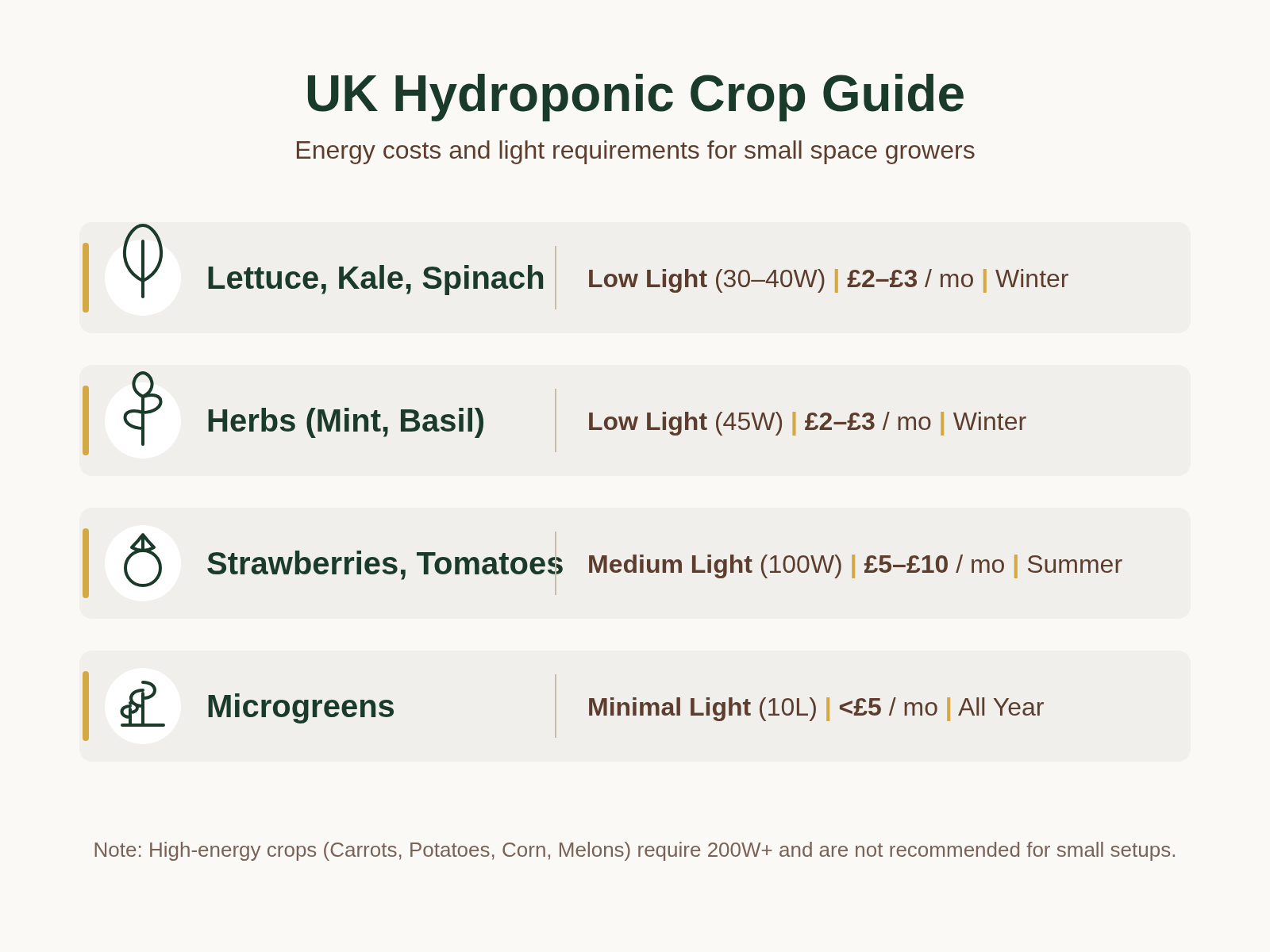
UK Hydroponic Crop Energy Guide
| Crop | Light Requirement | Energy Cost (Monthly) | Best Season |
|---|---|---|---|
| Lettuce, Kale, Spinach | Low (30–40 W LED) | £2–£3 | Winter |
| Herbs (Mint, Basil) | Low (45 W LED) | £2–£3 | Winter |
| Strawberries | Medium (100 W LED) | £5–£10 | Summer |
| Cherry Tomatoes | Medium (100 W LED) | £5–£10 | Summer |
| Microgreens | Minimal (10 L tray) | <£5 | All Year |
| Carrots, Potatoes | High (Deep medium) | N/A | Not Recommended |
| Corn, Melons | Very High (200–300 W) | £30–£40 | Not Recommended |
Before You Buy
You now have a clear picture of which crops actually pay off in a UK flat, which ones drain your wallet, and how to tweak lighting and humidity for the best results. The next logical step is to map your own space, check the available light, and decide which system matches your budget and time.
If you want to know more about who we are and why we focus on small-space growing, read about the SolisStrata Team. Otherwise, if you have a specific setup question, feel free to get in touch.
Ready to see if your balcony, windowsill or kitchen counter can support a micro‑farm?
Download the free vertical gardening quick reference – it’s a printable checklist that walks you through space planning, light budgeting and nutrient budgeting in a few minutes.
Keep the momentum going, and remember: the most rewarding hydroponic set‑up is the one that fits your life, not the one that promises a garden in a box. Happy growing!
Where I Learned This
- Royal Horticultural Society (RHS)
- Energy Saving Trust
- UKAPS Forum
Explore More Topics
Quick answers:
Go deeper on specific topics:
- Hydroponic Herbs UK: The 6 Fastest-Growing Varieties for Kitchen Counters
- Growing Hydroponic Lettuce UK: Best Varieties and How to Harvest Continuously
- Hydroponic Tomatoes UK: Indoor Growing Without a Greenhouse
- Hydroponic Strawberries at Home UK: Surprising Results for Small Spaces
- Hydroponic Chillies and Peppers UK: Compact Varieties That Thrive Indoors
- Starting Hydroponic Seeds UK: Germination Without Soil Step by Step
As an Amazon Associate we earn from qualifying purchases. The products linked above are ones we recommend based on independent research and owner feedback.
Note: General guidance only, verify details with a qualified professional or official source.

Bob is the publisher. We are a UK-based resource for simplifying complex topics to the world of small-space and container gardening. Helping UK gardeners get the most out of their balconies and patios. You can read our full story on the About the Author page.