
Wick System Hydroponics UK: The Simplest Setup for Beginners

As an Amazon Associate we earn from qualifying purchases. This page contains affiliate links — if you buy through them, we earn a small commission at no extra cost to you.
You’ve just unpacked a takeaway container, a coil of cotton rope, and a packet of nutrients, wondering if you can turn a kitchen windowsill into a reliable herb garden without tripping the landlord’s electricity meter. The flat-dweller’s nightmare of mouldy soil and noisy water pumps is real. A passive wick system bypasses all that. It costs almost nothing to build, uses zero electricity, and fits perfectly on a narrow balcony railing or tight worktop. Here is exactly what you need to get one running in the UK.
How does a hydroponic wick system work?
A wick system works by moving nutrient-rich water from a low reservoir up into the plant’s root zone using capillary action. A thick cotton rope or felt strip bridges the gap between the liquid and the growing medium above. Water climbs the fibres, keeping roots constantly damp but never water-logged.
This is the only hydroponic method that requires absolutely zero electricity. Because there is no motor, no pump, and no moving parts to fail, it is completely silent. This passive delivery means no power bills and a setup that can sit untouched for days while still feeding lettuce, basil, or microgreens. The simplicity of the design makes it highly suited to UK flats where space, noise, and plug sockets are usually at a premium.
Materials List (UK Specific)
Getting the right bits without endless searching is half the battle. Here is a concise shopping list you can source from typical UK retailers:
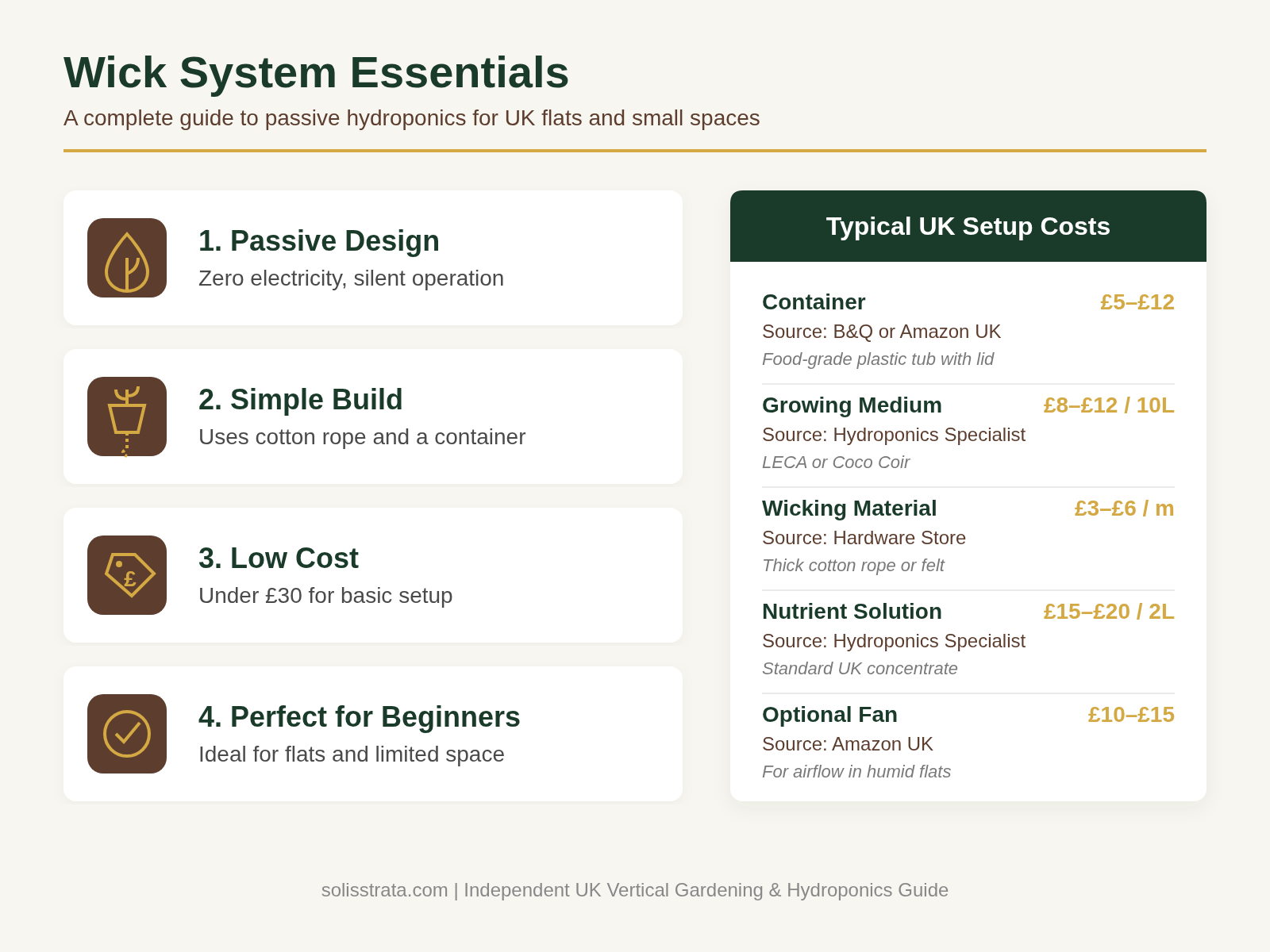
- Container: A food-grade plastic tub or takeaway box (around £5–£12 on Amazon UK or at B&Q). It should have a tight-fitting lid for the wicks.
- Growing Medium: Light-weight Expanded Clay Aggregate (LECA) or Coco Coir (paid link). LECA is sold by UK hydroponics specialists for around £8–£12 per 10-litre bag and is favoured because it stays inert, prevents root rot, and blocks soil-borne pests.
- Wicking Material: Thick cotton rope (about £3–£6 per metre) or felt strips (about £4 per roll). The fibre must be dense enough to pull water but not so fine that it clogs.
- Nutrient Solution: A standard UK hydroponic concentrate (around £15–£20 for a 2-litre bottle).
- Optional: A small fan for airflow (£10–£15) if your flat tends to be humid.
Budget Note: The best value choice is a clean plastic takeaway container and a length of cotton string. It won’t look showroom-ready, but it will keep the system functional for under £30. The trade-off is reduced durability and a less tidy appearance—fine for a trial run.
Step-by-Step Build Guide
- Prepare the lid. Drill evenly spaced holes (about 1 cm diameter) where the wicks will pass. A 3 mm drill bit works well for cotton rope; use a larger one for felt.
- Add the reservoir. Fill the bottom of the container with nutrient solution to a level that just covers the base of the wicks when they’re threaded through. Aim for a depth of 3–4 cm—deep enough to stay stable, shallow enough to avoid excess weight on balcony railings.
- Set the growing medium. Place a second tray or a shallow dish on top of the lid, then fill it with LECA or coco coir. The medium should be about 5 cm deep to give roots room to spread.
- Thread the wicks. Pull each wick through a lid hole, ensuring the lower end dips into the solution and the upper end rests in the medium. The wick length should reach the solution surface but not sit fully submerged; otherwise the medium can become water-logged.
- Plant the seedlings. Make a small hole in the medium, tuck the seedling’s root ball in, and gently cover with a bit of LECA. Space basil or lettuce seedlings about 10 cm apart to avoid crowding.
Space the wicks evenly across the lid. A common mistake owners report is clustering them, which creates dry zones in the centre of the tray. Even spacing ensures every plant gets a consistent moisture supply.
What to Grow (and What NOT to Grow)
Do grow:
- Herbs: Basil, mint, chives, and parsley thrive on a steady, modest water supply.
- Leafy Greens: Lettuce, baby spinach, and rocket develop quickly and stay compact.
- Microgreens: Fast-growing varieties like radish or mustard seed are perfect for a small wick system.
Don’t grow:
- Heavy feeders: Tomatoes, cucumbers, and peppers demand a high flow of water and nutrients that a passive wick cannot sustain. Owners consistently find the “wet feet” issue—where the wick sits too deep, the roots stay saturated, leading to rot and stunted fruit.
- Large fruiting plants: Even dwarf varieties need more oxygen at the roots than the wick can provide.
If you are after a quick, low-maintenance harvest, stick to light-feeding crops. that trying to grow a full-size tomato in a wick system will end in disappointment and a smelly reservoir.
Troubleshooting: The “Flat-Dweller” Edition
Mould and humidity are the twin gremlins that love UK flats. Here is a quick checklist to keep them under control:
- Mould on the lid or walls: If you spot white fuzz, increase airflow. A small desktop fan set on low (about 10 W) can cut surface humidity significantly. The Royal Horticultural Society (RHS) actively warns that stagnant indoor air raises mould risk, especially in winter when windows stay shut.
- Root rot: A sour smell from the LECA indicates the wick is pulling too much solution. Trim the wick back by 1–2 cm or raise the reservoir level so only the lower half of the wick is submerged.
- Dry tips: If leaf margins turn brown, the wick may be too thin or the medium too dry. Upgrading to a thicker cotton rope or adding a second wick per plant usually solves the issue.
- “Wet feet” problem: A frequent gripe across UK gardening forums is that overly long wicks keep the root zone saturated, encouraging algae. The fix is simple: cut the wick to just touch the solution surface and seal the lid tightly.
Owners also note that placing the system near a kitchen extractor fan helps control excess moisture without needing a dedicated dehumidifier. For more advice on managing indoor setups, browse our blog.
Ready to buy the bits?
With that in mind exactly what to look for, the next logical step is to source the components. A quick check on Amazon UK for cotton ropeSee on Amazon and a glance at your local B&Q for a suitable container will have you ready to assemble within an hour. Download the free vertical gardening quick reference to get a printable checklist and nutrient-mix ratios that match the crops above.
Common Questions
Do wick systems need electricity?
No. They are completely passive, relying on gravity and capillary action to move water from the reservoir to the roots. You do not need to plug anything in.
Can I use tap water?
Yes, but let it sit in an open jug for 24 hours first. Water UK guidelines confirm this allows the chlorine used in treatment to evaporate, protecting delicate young roots. If you live in a hard water area like London or the East of England, mineral buildup can clog the wicks, so using collected rainwater is a smart alternative.
How often do I change the water?
Every one to two weeks is sufficient to stop algae growth and avoid nutrient lockout. Flush the system with fresh solution and give the wicks a quick rinse under the tap to keep the fibres clear.
Wick System Build Checklist
| Component | Recommended UK Source | Approx. Cost | Notes |
|---|---|---|---|
| Container | B&Q or Amazon UK | £5–£12 | Food-grade plastic tub with lid |
| Growing Medium | Hydroponics Specialist | £8–£12 per 10L | LECA or Coco Coir |
| Wicking Material | Hardware Store | £3–£6 per metre | Thick cotton rope or felt |
| Nutrient Solution | Hydroponics Specialist | £15–£20 for 2L | Standard UK concentrate |
| Optional Fan | Amazon UK | £10–£15 | For airflow in humid flats |
Keep Learning
A wick system gives you a low-cost, low-maintenance entry point to hydroponic growing that respects flat-living constraints—no pumps, no noisy equipment, and no heavy electricity bills. By choosing the right UK-sourced materials, planting light-feeding crops, and keeping an eye on humidity, you can harvest fresh basil, lettuce, and microgreens all year round.
Ready to start? Grab the free vertical gardening quick reference—it includes exact nutrient ratios, spacing charts, and a printable build checklist to keep your project on track.
If you hit a snag or have a question about your flat’s specific conditions, feel free to get in touch via our email. Happy growing!
As an Amazon Associate we earn from qualifying purchases. The products linked above are ones we recommend based on independent research and owner feedback.
Related Guides
For a complete overview, see our Hydroponics for UK Home Growers: Which System Actually Suits Your Space?.
References
- Royal Horticultural Society (RHS)
- Water UK
- Hydroponics UK
You may also like
Other listings for the same job.
- 5 W mini pump, 350 L/h (paid link)
- AQQA air pump, 12 W (paid link)
- 24-hour plug-in timer (paid link)

Bob is the publisher. We are a UK-based resource for simplifying complex topics to the world of small-space and container gardening. Helping UK gardeners get the most out of their balconies and patios. You can read our full story on the About the Author page.