
Hydroponics for UK Home Growers: Which System Actually Suits Your Space?

As an Amazon Associate we earn from qualifying purchases. This page contains affiliate links — if you buy through them, we earn a small commission at no extra cost to you.
Most hydroponic guides assume you have a garden shed or a spare garage. The reality for UK renters and flat-dwellers is a tight kitchen nook or a balcony with strict weight limits. If you want to grow food indoors without soil, you need a system that won't breach your lease, annoy the neighbours with pump noise, or spike your energy bill. Here’s the honest breakdown of which hydroponic setups actually work in small British spaces, factoring in noise, weight, and running costs.
Ready to skip the guesswork? Download the free vertical gardening quick reference and keep it handy while you read on.
The “Flat vs. Balcony” Reality Check
Flat dwellers need to worry first about noise and weight. Most local councils consider indoor sound above 40 dB during the day a nuisance. A full 20-litre water bucket adds roughly 20 kg, which, combined with the system housing, can test the floor load limits of older UK flats.
Balcony users must think about waterproofing and wind resistance. Many older council‑owned balconies are only rated for strict static loads, and the occasional gust can topple an unsecured tower.
Quick decision tree
- Flat? → Jump to the “Deep Water Culture” and “Ebb & Flow” risk notes.
- Balcony? → Focus on “Vertical Aeroponic Towers” and waterproof trays.
The legal backdrop matters: GOV.UK guidance on renting notes that permanent property modifications require landlord approval, and a leaking 20-litre hydro-reservoir definitely falls into that category. For a broader view on getting started, explore the hydroponics guides on our blog.
Deep Water Culture (DWC) – The “Bubbler”
DWC keeps plant roots suspended in oxygen‑rich water. It’s popular because the nutrient solution is simple to prepare and growth is fast.
Flat‑specific risk: The air pump runs 24 hours a day. A typical 12‑V aquarium pump draws about 15 W and emits roughly 45 dB – louder than a quiet dishwasher. In a thin‑walled flat this hum can travel through plaster and annoy neighbours.
Weight issue: A 20‑litre DWC reservoir means over 20 kg of water, pushing the load on ceiling joists if you start linking multiple buckets together.
Balcony concern: Summer heat speeds evaporation, and an unshielded bucket can tip in a light breeze.
Best for: Grow‑tent enthusiasts who can locate the system on a sturdy floor and tolerate the constant pump sound. Hydroponic forum users consistently flag the noise, noting that cheap air stones are audible through closed bedroom doors. If you cannot accept a low‑level hum, DWC is the wrong fit.
AutoPot (Self‑Watering) – The “Set and Forget”
AutoPot relies on gravity: a reservoir feeds plants through a timed drip, with no pump or electricity required for watering.
Flat win: No moving parts mean zero pump noise – the quietest option on the market.
Balcony win: Because it runs on gravity, the system draws no power for water delivery, keeping your energy bill down.
Budget note: Manual AutoPot kits start around £60–£90. Owners frequently report saving money on electricity after swapping a constant-running DWC pump for a gravity‑fed AutoPot system.
Trade‑off: You’ll need to top up the reservoir daily in hot weather; it isn’t truly hands‑off. For renters who want to avoid extra electricity costs, the silent, zero-power draw makes AutoPot a sensible starter.
Vertical Aeroponic Towers – The “Space Saver”
Aeroponics misters spray a fine nutrient mist onto suspended roots. The towers can stack dozens of plants in a footprint of just 30 cm × 30 cm.
Flat risk: The misting pump, often 10‑15 W, can emit a faint whir that adds up to 40 dB – borderline for a quiet flat. The water reservoir, though smaller than DWC, still adds weight when full, and any leak can soak a carpet instantly.
Balcony advantage: Vertical growth maximises limited square footage and keeps the planting area off the ground, which is handy on tiled patios.
Common gripe: Reviewers warn that the pump can sound like a small indoor fountain and that the mist‑nozzle can clog with hard water deposits. This is a particular pain in areas with high calcium levels such as East Anglia or London. Regular cleaning with a vinegar solution helps prevent blockages.
Best for: Balconies with waterproof decking and a mild wind shelter. They are not ideal for thin‑wall flats unless you can isolate the pump in a noise‑dampening box.
Ebb & Flow (Flood and Drain) – The “Tent Standard”
The system floods a grow tray with nutrient solution, then drains it back into a reservoir. Timing is controlled by a timer‑linked water pump.
Flat suitability: Requires a grow tent (usually 60 × 60 cm or larger) that can be bulky in a small bedroom. The pump runs intermittently, typically 8‑12 W, cutting noise but still audible during the flood cycle.
Balcony hazard: An uncovered tray can become a miniature pond in a summer shower. Balcony gardeners often share photos of rain‑filled trays spilling over and ruining outdoor rugs.
Checklist for tent setup:
- Verify the tent dimensions fit the room or balcony shelter.
- Choose a pump rated ≤12 W and check the decibel spec (aim for <40 dB).
- Seal the tray edges with silicone to prevent leaks.
Ebb & Flow remains a reliable beginner system when you have a dedicated indoor space or a covered balcony that can accommodate a waterproof tray.
How Much Do Hydroponic Systems Cost to Run in the UK?
Running a continuous hydroponic pump costs between £1.50 and £3.00 per month, depending on the wattage of your equipment and your exact energy tariff. Based on the Ofgem energy price cap, the average UK household electricity rate sits around 24p per kWh. A standard 15-watt water pump operating 24 hours a day consumes about 0.36 kWh daily. This equates to roughly 8p per day, or £2.50 per month. Upgrading to a 30-watt pump doubles that cost to roughly £5 per month.
Beyond electricity, noise is the other hidden cost of running a system. UK environmental health guidelines generally expect indoor daytime noise to stay below 40 dB to avoid statutory nuisance complaints. Many cheap aquarium pumps exceed this threshold, so you should always check the decibel rating before buying. Installing a simple plug-in timer (paid link) is a cheap fix that cuts your electricity bill by a third and gives you guaranteed quiet hours overnight.
Check the 24-hour plug-in timer price
How to Safely Install a Balcony Hydroponic System
1. Check your lease and structural limits
Before buying anything, confirm your balcony's weight capacity and read your tenancy agreement. Most standard UK council balconies are rated for around 35 kg per square metre of static load. Leases often contain specific clauses restricting water-based systems or heavy planters.
2. Waterproof the base area
Place a heavy-duty boot tray or a custom waterproof mat directly under your reservoir. This catches minor spills during nutrient top-ups and prevents water from dripping down onto the balcony below. It also protects your decking from long-term moisture damage.
3. Secure the system against wind
Tie vertical towers or tall climbing plants to the balcony railings using weather-resistant cable ties or bungee cords. UK autumn winds can easily tip an unsecured, top-heavy system. Anchoring the base prevents sudden spills and broken equipment.
4. Route power safely
If your setup requires a pump, use a dedicated outdoor-rated extension lead fitted with an RCD (Residual Current Device). Never run standard indoor extension cables through a cracked window where rain can reach the plug. Keeping electronics dry is a non-negotiable safety step.
Buying Guide / Checklist
Before you add a system to your basket, run through this quick audit:
- UK plug: Ensure the pump or timer has a 3‑pin UK plug; adapters add cost and can be a fire hazard.
- Wattage: Aim for pumps < 15 W for flats; lower wattage equals lower electricity bills and quieter operation.
- Noise rating: Look for decibel figures; under 40 dB is the sweet spot for shared walls.
- Weight: Calculate total water load (1 Litre = 1 kg). For a 20-litre reservoir you are adding 20 kg plus the container weight.
- Waterproofing: On balconies, choose sealed reservoirs and always use a drip tray to catch overflow.
- Warranty & support: UK‑based suppliers often provide a 2‑year parts guarantee; check this before buying.
Quick checklist:
- UK 3‑pin plug confirmed
- Pump ≤ 15 W, ≤ 40 dB
- Total water weight within floor limits
- Reservoir sealed and leak‑tested
- Warranty covers at least 2 years
If you are ready to start ticking boxes, Download the free vertical gardening quick reference – it walks you through measuring space, checking load limits and comparing pump specs.
Common Questions
Is hydroponics allowed in UK flats?
Yes, provided the system does not create damp, exceed floor weight limits, or generate persistent noise that breaches lease terms. Check your tenancy agreement for clauses on water-based systems and ask your landlord for written consent if you are unsure.
Which system is quietest for flats?
AutoPot’s gravity-fed design is effectively silent because it uses no water or air pump. If you prefer a powered setup, look for low-wattage Deep Water Culture (DWC) or Ebb & Flow pumps rated strictly under 40 decibels.
Can I put a hydroponic system on a balcony?
Yes, but the equipment must be waterproof, securely anchored against wind, and within the balcony's structural weight limit. Vertical towers and self-watering kits are the most practical choices because they keep the footprint small and avoid loud pumps.
Do hydroponic systems use a lot of electricity?
They use far less power than a full indoor grow room with high-intensity lighting. A standard 15-watt water pump costs about £2.50 per month to run constantly, and using a plug-in timer can cut that cost significantly.
UK Hydroponic System Comparison
| System | Noise Level | Power Draw | Best For | Weight Consideration |
|---|---|---|---|---|
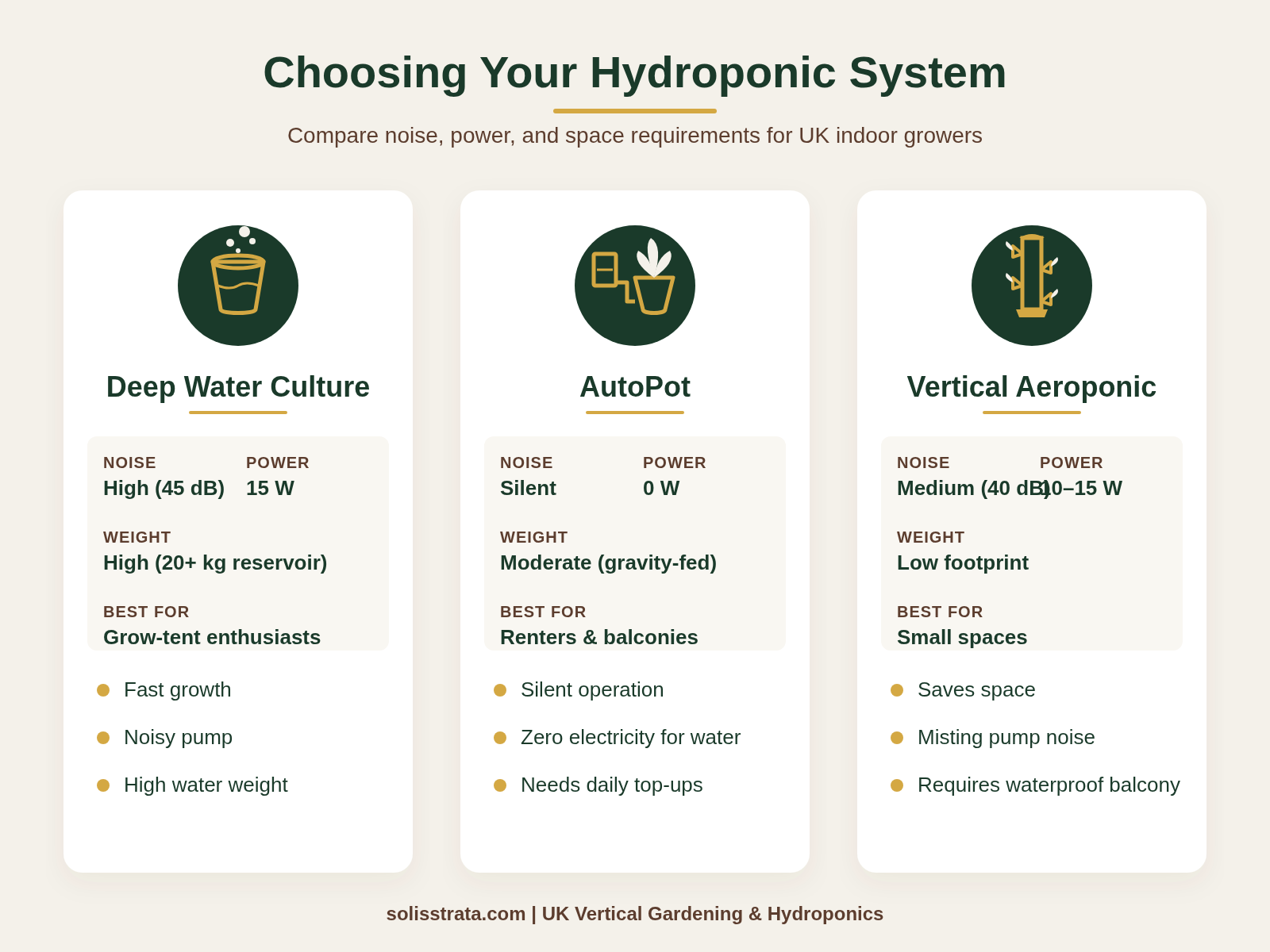
| Deep Water Culture | High (45 dB) | 15 W | Grow-tent enthusiasts | High (20+ kg reservoir) |
| AutoPot | Silent | 0 W | Renters & balconies | Moderate (gravity-fed) |
| Vertical Aeroponic | Medium (40 dB) | 10–15 W | Small spaces | Low footprint, vertical growth |
| Ebb & Flow | Medium | 8–12 W | Dedicated indoor space | Requires grow tent & waterproof tray |
| Standard Pump | High | 15–30 W | General use | Variable based on reservoir size |
As an Amazon Associate we earn from qualifying purchases. The products linked above are ones we recommend based on independent research and owner feedback.
Your Next Step
The bottom line is simple: the best hydroponic system for a UK renter is the one that respects the flat or balcony constraints you live with. If noise limits, weight limits and waterproofing are non‑negotiable, AutoPot or a well‑sealed vertical tower will give you fresh herbs without the neighbour‑complaint risk. If you have a dedicated indoor space and do not mind a modest pump hum, DWC or Ebb & Flow deliver fast growth and solid yields.
With that in mind what to look for, download the free vertical gardening quick reference and use it as your checklist before you click “add to basket”. Got a lingering question? Reach out and get in touch – the SolisStrata Team is happy to help you keep your indoor garden legal, quiet and cost‑effective.
Explore More Topics
Quick answers:
Go deeper on specific topics:
- The Kratky Method UK: Grow Food With No Pump, No Power, No Fuss
- Deep Water Culture (DWC) for Beginners: UK Setup Guide
- Kratky vs DWC: Which Hydroponic Method Is Right for a UK Flat?
- NFT Hydroponics at Home: Is It Worth It for UK Small Spaces?
- Passive vs Active Hydroponics: The Real Difference for UK Beginners
- The Cheapest Way to Start Hydroponics in the UK (Under £30)
- Wick System Hydroponics UK: The Simplest Setup for Beginners
Further Reading
- Royal Horticultural Society (RHS)
- Ofgem (Energy Price Cap)
- GOV.UK (Private Renting)
Note: This information is for general guidance only. Always verify specific lease terms, structural load limits, and local noise regulations with a qualified professional or your landlord before installing a hydroponic system.
You may also like
Other listings for the same job.
- 5 W mini pump, 350 L/h (paid link)
- AQQA air pump, 12 W (paid link)
- 100 rockwool cubes (paid link)

Bob is the publisher. We are a UK-based resource for simplifying complex topics to the world of small-space and container gardening. Helping UK gardeners get the most out of their balconies and patios. You can read our full story on the About the Author page.